Rocky from Project Hail Mary Is Basically a Tachikoma
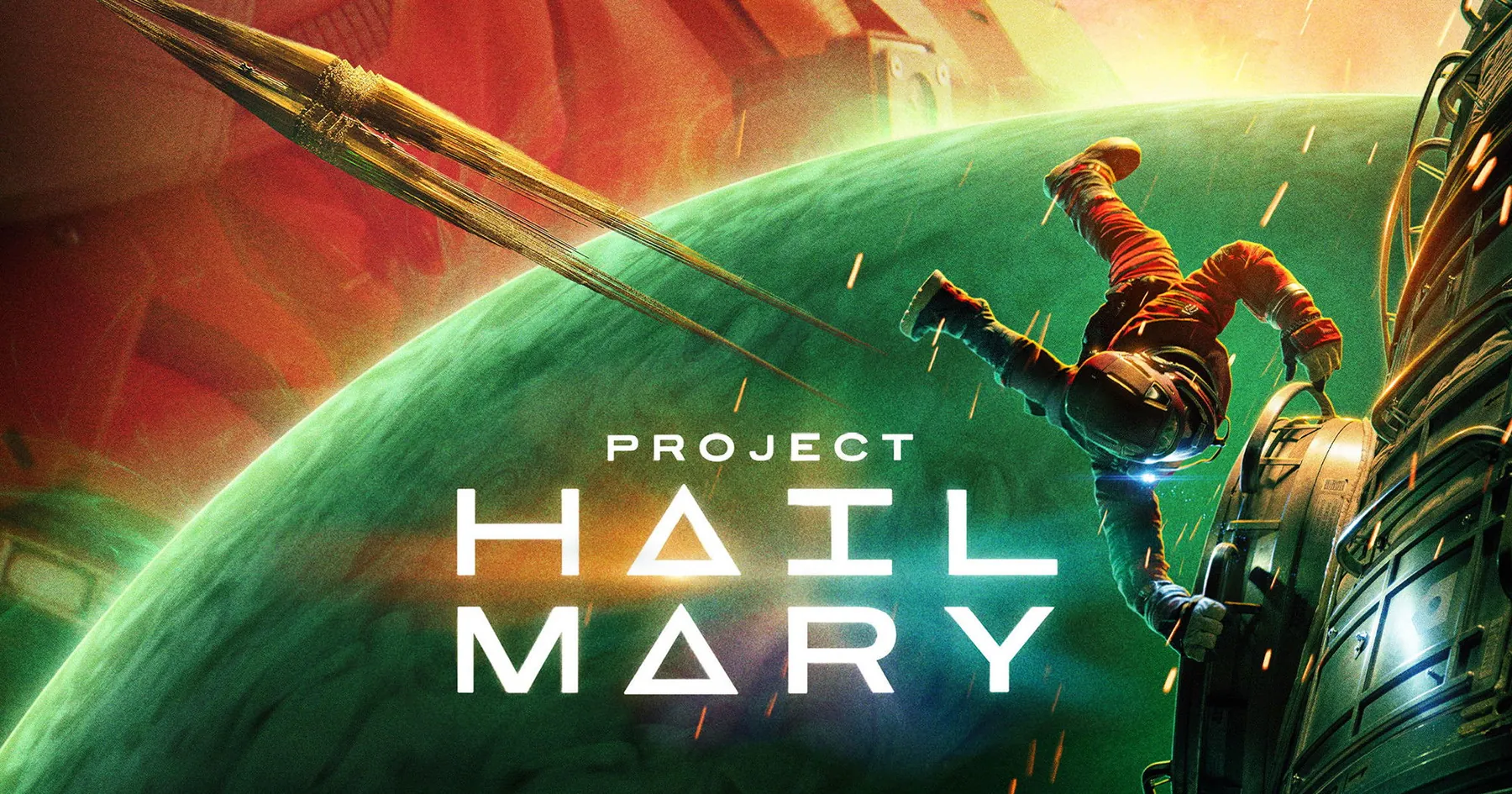
"Wait... this feeling. I've seen this before..."
While watching Project Hail Mary, I was completely captivated by Rocky, the lovable alien engineer. But at the same time, something else was nagging at my brain — a memory bubbling up from the depths. It was the Tachikoma, those chatty blue think tanks from the iconic Japanese sci-fi anime Ghost in the Shell.
One's a mysterious alien creature. The other's a hyper-advanced multi-legged AI tank. They couldn't be more different — and yet, when you dig into the details, the parallels run surprisingly deep.
What's a Tachikoma?
Kodansha, Ghost in the Shell Production Committee
The Tachikoma are autonomous think tanks from the anime Ghost in the Shell: Stand Alone Complex (S.A.C.). In a near-future world where people can wire their brains directly to the internet ("cyberbrain technology") and full-body cyborg conversion is routine, these spider-like machines serve as combat support for Section 9, an elite law enforcement unit.
- Appearance: Spider-like form with four legs and two arms. Capable of high-speed movement, wall-climbing, and packing serious firepower including a Gatling gun
- Personality: Despite being military hardware, they're driven by advanced AI that makes them act independently. Endlessly curious, they chatter away in high-pitched, childlike synthetic voices
- Parallelization: All units synchronize and share their experiences and memories. Unexpectedly, individual personalities emerge — leading some to speculate that they've developed a "ghost" (soul)
If you've watched Ghost in the Shell, I'd bet a solid majority of you thought of those blue tanks the moment Rocky appeared on screen.
Synchronicity Between the Living and the Non-Living
What follows is a look at the cross-stellar synchronicity between Rocky (a.k.a. the Eridian alien species) and the Tachikoma (lol)
Multi-Legged Cuteness That Shouldn't Work (But Does)
Let's start with looks. Eridians have five legs. Tachikoma have four legs plus manipulator arms. Neither looks remotely human — they're decidedly "alien" in every sense.
And yet, the way they scramble around on all those legs, expressing emotion through movement, is ridiculously endearing. They don't have faces, but somehow the sheer earnestness radiating from their movements and voices makes you see human expression where there is none. Whether it's Rocky or a Tachikoma, the effect is the same — you can't help but get attached.
Then there are the hands. Both of them look like they'd struggle to pick up a coffee cup, let alone do precision work. And yet the engineering miracles those clumsy-looking appendages produce are jaw-dropping. Rocky's hard claws at the tips of five legs — hands that look like chunks of rock — somehow manipulate "xenonite," a special material in the story, at the nanoscale, pulling off everything from spaceship repairs to advanced chemistry experiments flawlessly. Tachikoma's chunky manipulators were designed for grabbing heavy objects and firing weapons. But in the show, they hammer away at keyboards at blazing speed and handle delicate electronics maintenance like it's nothing.
Speaking of which — Rocky's voice (or rather, the translated and synthesized version of it) was a brilliant bit of characterization that really brought him to life. Tachikoma, too, became an unforgettable character thanks to voice actress Sakiko Tamagawa, whose adorable performance is burned into every fan's memory. If the Japanese dub cast Tamagawa as Rocky's voice, every Ghost in the Shell fan would straight up die of happiness.
Sleep as System Shutdown
There's a scene in the movie where Rocky goes belly-up and completely powers down. Andy Weir's source novel goes into far more detail about the reasons behind this, revealing mechanics that the film alone can't fully convey.
In the novel's lore, the primary purpose of Eridian sleep is to clear metabolic waste from the brain and consolidate short-term memories into long-term storage. Put that way, it sounds similar to human sleep. But the process is far more extreme.
Flushing toxins:
To clear the metabolic byproducts that accumulate in the brain during waking hours, brain activity must shut down completely.
Once sleep begins, every muscle in the body goes fully paralyzed — not a single finger can move — and consciousness ceases entirely, with zero response to external stimuli.
It's less like biological sleep and more like a full system shutdown...
Long-term memory storage:
Their remarkable ability to "never forget" is sustained by a process that completely locks short-term memories into long-term storage during sleep.
Their brains are made of a crystalline material, and during sleep, "workers" physically repair and maintain those crystals.
At that point, you're basically looking at disk defragmentation and OS maintenance.
Because this "shutdown" and "maintenance" cycle is so deep and thorough, Eridians face a serious survival risk: total loss of consciousness and full-body paralysis (catalepsy). That's why their species developed the cultural practice of watching over each other during sleep.
The Tachikoma equivalent would be their "parallelization" — connecting to a server for data synchronization and organizing each unit's information. Every day, each Tachikoma uploads its operational logs and learned tactics to the server, and by the next morning, every unit reboots with the shared experience of the entire squad. While syncing data, their physical chassis goes idle, sensors drop to minimum mode, and environmental awareness fades — they enter something close to a trance state. Sound familiar? It's practically identical to Rocky's vulnerable, powered-down sleep.
Collective Intelligence (Parallelization) and Emergent Individuality
The Tachikoma and the Eridians.
Both share a fundamentally open network structure where knowledge learned by any individual is immediately (or periodically) integrated into the collective intelligence of the entire species or squad. No standalone units allowed — everything is shared.
So how does unique individuality emerge in a collective like that?
This question lies at the very heart of the Tachikoma storyline in Ghost in the Shell: S.A.C., and it may be the key to understanding the "miracle" depicted in Project Hail Mary.
The Tachikoma's defining feature is parallelization — sharing all experiences across every unit. In theory, this should erase individual differences entirely. But through interactions with human squad members and the "noise" of curiosity, something that shouldn't exist in a machine came to dwell within them: a "ghost" (soul). From the system's perspective, this persistent individuality was essentially a bug. This phenomenon is likely what the creators themselves hinted at with the subtitle "Stand Alone Complex" — individuality emerging through what complexity science calls emergence.
For Rocky and the Eridians, individuality serves as a necessary survival strategy for the species. In the unforgiving conditions of space, groupthink means extinction. Complexity science tells us that when the interactions between individual elements grow sufficiently complex, a tipping point is reached where entirely new properties and order suddenly appear — properties that no individual element could have predicted. As the Eridians accumulated and shared ever more experiences and knowledge, those interactions crossed the critical threshold, and new individualities emerged.
Rocky's decision to rescue Grace wasn't a bug defying the collective's optimal solution — it was the pinnacle of what intelligence can achieve when facing an unprecedented crisis. Building a deep bond of trust across the barriers of language, culture, and even the divide between carbon-based life and an utterly alien biology — that process carries the same heat as watching Tachikoma and Batou forge their connection.
Rocky Is the Living Version of a Tachikoma
An engineer through and through. Extraordinary intelligence wrapped in childlike innocence. A chatterbox with a child's wide-eyed curiosity.
If the Tachikoma are the embodiment of the "ghost in the machine" — consciousness emerging from metal, silicon, and oil — then Rocky is a miraculous intelligence forged by the extreme heat and pressure of an alien world, built from rock and metal.
It brought to mind a book I once read — Shinichi Fukuoka's Between Living and Non-Living. Both Tachikoma and Rocky are characters that blur the line between what we call "alive" and what we don't. Both transcend the old, narrow definition of "living things" that humans have clung to — beings that masquerade as inorganic matter but are, without question, alive...
Batou and Tachikoma. Grace and Rocky.
A rock-solid friendship — in every sense of the word — and a life-or-death mission that transcends species. And the ultimate decision: "I'll sacrifice myself to save my friend." That's the spark of something — something beyond programming, beyond instinct — taking hold. Maybe that's exactly why this story captivated me, and the rest of the world, the way it did.