Amazon's Scarpetta — How Did It Come to This?
Let me say this upfront: as the tags make clear, this post is packed with spoilers.
If you haven't watched the show or read the books and want to enjoy the story as it unfolds, do yourself a favor and stop reading now.
Patricia Cornwell's bestselling Kay Scarpetta series has finally been adapted for TV.
When I heard the news, as someone who used to devour those books, I thought, "Oh, at last!" — my heart leapt.
And Amazon Prime Video is footing the bill, co-producing with Blumhouse — the horror powerhouse?!
Plenty of budget, top-tier horror pedigree — what's not to love?
That's what I thought. For a while. (Thousand-yard stare.)
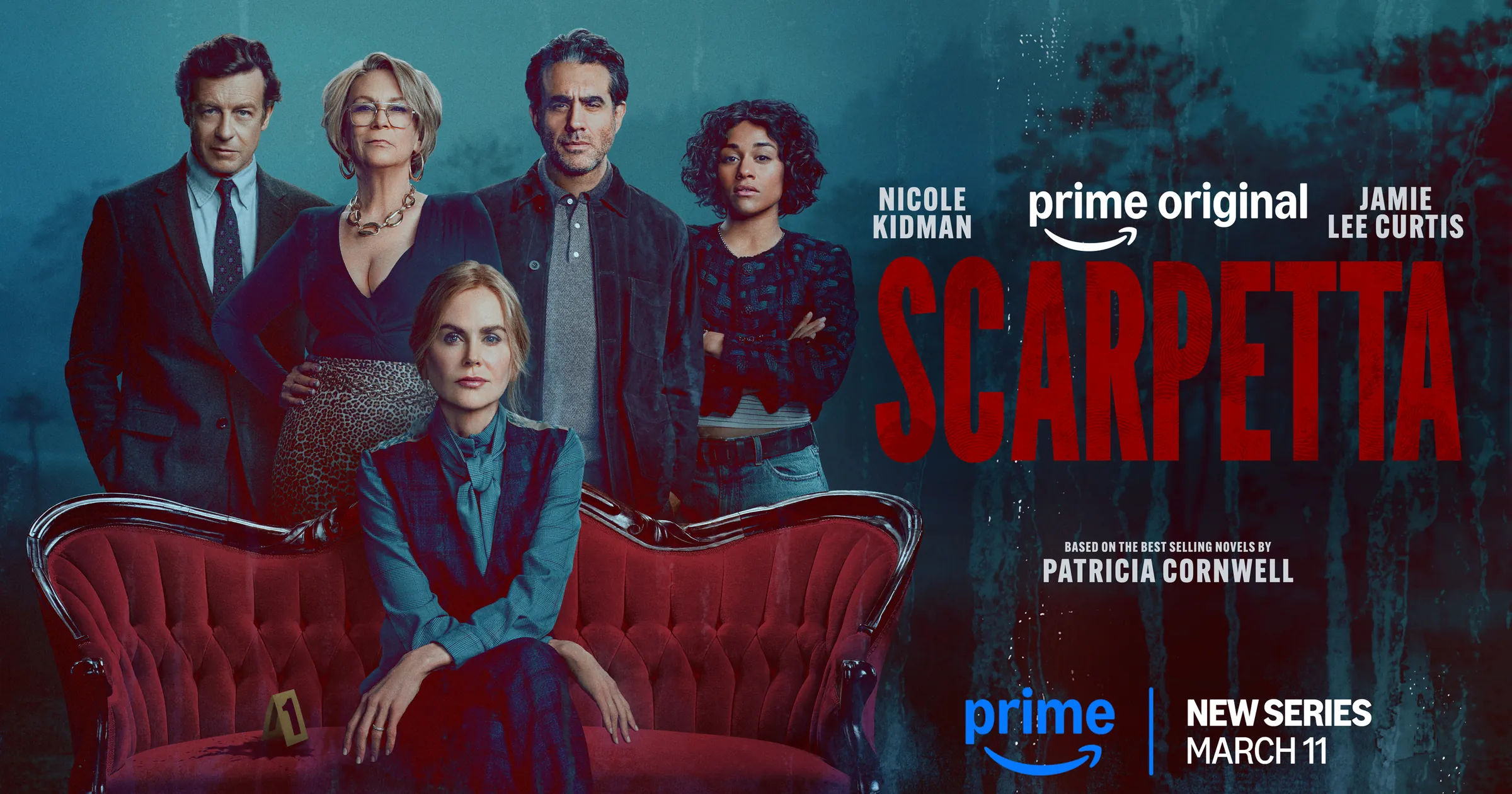
Nicole Kidman in the lead. Plus Simon Baker, Jamie Lee Curtis, and Bobby Cannavale — a genuinely stacked cast.
…Hold on, though. Aren't they all a bit…
A bit old?
And somehow, Kay Scarpetta and the rest just don't quite match the image in my head.
My bad feeling turned out to be spot on.
What I got wasn't the forensic science mystery I loved. It was a violent soap opera where the family screams at each other around the clock.
How did it come to this?
From the perspective of someone who started the books from the beginning but dropped off partway through (I gave up halfway through the 11th novel, The Last Precinct), I'm going to tear into this adaptation with both hands.
Wait, It's Set 28 Years Later?
I suspect a lot of series dropouts, like me, fell off around book 10.
The shocking death of beloved Benton. And the mess that followed.
A heartbroken Scarpetta, half-forced off to Paris, being stalked by some mystery werewolf (?). I couldn't follow any of it. The whole thing veered into X-Files territory, drifting further and further from grounded forensic mystery, and I just couldn't keep up. That was me back then.
For someone whose mental clock had stopped around the turn of the millennium, episode 1 was one shock after another.
The Setting Is Present Day
Scarpetta gets jolted awake by a phone call. But… is that a smartphone?
Book 1 was set in the 1990s, right?
And that was just the beginning of my confusion.
A bridge girder conspicuously displays "2026." Oh, so it really is present day.
Then in strolls Marino. Wait — that's Marino?
And he's skinny? What, Marino — have you been on a diet?
Wait, did Marino shrink? No, hang on — Kidman plays Scarpetta, so Scarpetta's the tall one now.
And his hair — he's got a full head of it. Is that a wig? Seriously, is that a wig?
Lucy's Gone Black
Lucy was supposed to be a redhead with green eyes, white, a head-turning beauty.
But the Lucy who shows up to visit her partner's grave is — however you slice it — Black.
The headstone, shown in close-up, bears the name Janet, her partner. Lucy has been a lesbian in the original books, so fine, I can accept that the girl she was dating has died. That part I can roll with.
I'm not a racist, and I'd never say someone's wrong because they're Black.
But changing an original character's race? Come on.
Her mother Dorothy, standing right next to her, is white (Jamie Lee Curtis), so I guess she's meant to be biracial.
Classic Amazon move, maybe — laying the diversity casting on a little thick.
Benton Is Alive!
Mid-birthday-party for Lucy, a man casually walks in.
"Benton just got here in time…" Wait, what?
The man who died a brutal death in book 9, Point of Origin, whom fans mourned for years, is alive and well?
Not just alive — married to Scarpetta.
What is going on here?
I looked it up afterward, and apparently even in the novels Benton was resurrected via a "surprise! He was actually in witness protection, whoops" retcon, and the two eventually married.
Yeah, no. No way. Scarpetta thoroughly autopsied his body herself after he was burned alive by the killer. She went to the scene. Benton's dental records were a perfect match. There's no way he's alive.
Marino and Dorothy Are Married?!
As if that weren't enough, at the birthday party, Marino and Dorothy share a deep kiss.
Hold on — why are these two making out in front of Dorothy's own daughter? Wait, they're married?
Dorothy used to despise Marino, and Marino looked down on Dorothy. These two ending up together is a plot twist so wild it circles back to insane.
Two deeply unpleasant people who barely even interacted in the books are now husband and wife, living on the same property as the Scarpetta-Benton couple.
Also — Marino, weren't you head over heels for Kay? "Welp, the younger sister's out of my league, guess I'll take the older one"? Is that really how this went, buddy?
From episode 1, the questions just kept piling up.
"Is this really the Scarpetta series I know?" That nagging sense of wrongness was my constant companion as the show unfolded.
Character Breakdowns, One by One
The main characters in this TV adaptation, from the perspective of a lapsed-but-devoted reader like me, have been transformed into people who share names with the originals and basically nothing else.
Kay Scarpetta, Reimagined (Nicole Kidman)
The Kay I remember from the books is a dashing northern-Italian-type beauty — blonde hair flowing, petite but curvy.
Hard-charging at work, but on weekends she'd knead flour and make homemade pasta, unwind over a glass of wine.
She was a grown woman with presence, with real sensuality (that's the important part — worth bolding, I'd say).
The kind of woman gruff Marino would secretly lust after, the kind who'd make Benton's knees weak. That feminine presence was part of who she was.
Kidman's version is tall, fair-skinned in a Scandinavian way, more razor-sharp, icy beauty.
Too beautiful to feel fully human — there's almost no sense of a real life being lived.
For one thing, Kidman is just too tall. Part of the books' charm was the odd-couple vibe between petite Kay and the hulking Marino, but in the show, when they stand side by side, they're practically eye-to-eye. Instead of being someone Marino might accidentally ogle, she radiates a razor-sharp unapproachability — touch her and you'll get cut.
Her personality has flipped too. Book Kay is unshakably calm. A perfectionist who almost never lets her emotions spill over.
Show Kay raises her voice constantly and drops f-bombs left and right. She's condescending, self-absorbed, and not someone I'd ever want to spend time with — a woman brimming with pent-up frustration.
Silver-Fox Marino (Bobby Cannavale)
The Marino I remember was a big, balding, greasy guy with a beer belly.
Always sweating, shirts stained with dropped food, chain-smoking cheap cigarettes around the clock.
Foul-mouthed, openly prejudiced against women and gay people at first. The kind of old-school schlub you'd call a "Showa-era disaster of a man," in Japanese terms.
"Grungy and unromantic, but actually a consummate pro and a hell of a detective."
That weirdly vivid, unforgettable character was what I loved.
Cannavale's version is tall, sure, but muscular and solidly built. Full head of hair (!), and honestly more of a rugged, sexy silver fox than anything else.
The distinctive tension of "unwashed man with an unrequited crush on an elite woman" is just gone.
The threadbare shirt and cheap tie, the working-class melancholy — all scrubbed away, replaced by a "sharply dressed hunk" who looks like he'd be sipping wine at some upscale estate.
This is not it. This is not Marino. It's just a handsome sidekick.
Also, in the 28-years-ago flashback scenes, Cannavale's own son, Jake Cannavale, plays young Marino.
He's got his dad's genes plus youth and charm, and I can see why he'd be a fan favorite.
Obviously no gut on him either — we're way past "he's been on a diet lately." This guy's clearly been a ladies' man his whole life.
Instantly Smitten Benton (Simon Baker)
Simon Baker, Patrick Jane from The Mentalist — that charmingly roguish genius — is playing Benton. (Personally I can't shake the image of him as the handsome author tempting Anne Hathaway in The Devil Wears Prada.)
The character has been completely overhauled from the books. The distinctive "silver-haired FBI genius profiler" look is gone — replaced by a blond, wishy-washy, brooding guy.
If this were a popular anime adaptation and they'd changed a silver-haired character to blond, the creators would have been crucified by the fanbase.
His background has been changed too. In the books he's a scion of a wealthy New England family, the ultimate elite. In the show, for some reason, he's a Southern-accented local boy.
The intelligent, elegant air is completely lost.
Then, in the books, Benton is a married man with a wife and kids, which is exactly why his relationship with Kay — two people recognizing each other's intellect and professional depth, drawn to each other but holding the line — had that restrained, professional tension.
The forbidden-romance frisson was the whole appeal. In the show, they're mooning over each other from the moment they meet. They haven't even solved the first case and they're already making out in front of Lucy. The "grown-up restraint" of the original has gone out the window from day one.
Get a room, you two.
Dark-in-Every-Sense Lucy (Ariana DeBose)
As I mentioned, the Lucy I remember is white. So right off the bat the visual is completely different.
Setting aside the race change as behind-the-scenes studio politics, book Lucy is cocky but brilliant — a genius hacker who'd amassed a fortune by age 13. Recruited into the FBI Academy young, an ATF agent, an action heroine who could fly a helicopter and handle any firearm — a "one-woman army."
In the show, though, she's living under Kay's wing, unable to move past her partner's death, a mentally fragile mess.
Barely a trace of the action heroine remains. She holes up in her room, having built an AI version of her dead wife Janet, and spends her days conversing with the AI. Full tormented-character mode.
Has the death of her beloved Janet — to whom she was actually married — really broken her this completely?
Body and soul, she's gone full dark…
Shrieking Dorothy (Jamie Lee Curtis)
Book Dorothy was a troublemaker older sister, sure, but she functioned more as narrative seasoning — someone who'd show up occasionally for flavor. She wasn't exactly hysterical, and she barely appeared.
In the show, though, she's swollen up into practically a lead role. She gets into screaming matches with Kay, drags her new husband Marino around, takes over the house, and is constantly yapping and stirring up trouble.
She is, without exaggeration, this show's single greatest source of stress.
I'll be honest. I wanted to hit stop on the player more times than I can count.
A serious suspense scene turns to chaos the instant she's on screen, and suddenly we're in a loud, pointless family dramedy.
The creators may have intended her as comic relief, but to put it politely, she "undermines any sense of tension" — less politely, she's "way too much."
I wonder if this has something to do with Jamie Lee Curtis being an executive producer on the project.
She's been a longtime friend of Cornwell and apparently one of the "godparents" who pushed for this adaptation for years.
When you've got the connections and the money to be an executive producer, self-serving script changes are all yours for the taking.
I can see how the director might not have had it in him to say, "maybe tone it down a bit."
The Share House From Hell — Under One Roof, All Screaming
The show is set at a gorgeous Virginia estate that originally belonged to Benton.
- Main house: Kay and Benton
- Separate wing: Dorothy and Marino
- Detached guest house: Lucy's private space
Medical examiner Kay, FBI profiler Benton, veteran detective Marino. Genius-hacker niece Lucy. (And Kay's sister Dorothy, along for the ride.)
What I loved about the books was the stoic coolness of these independent professionals, each doing their job at the top of their game, with pride, in their own domains.
In the show, they've all been turned into family and crammed under one roof (well, one property). And every time they run into each other, it's a chorus of f-bombs and insults.
This isn't a forensic mystery anymore. It's a melodramatic family drama, or a sitcom.
Actually, not sitcom. Shitcom.
Every time Dorothy comes shrieking into the kitchen, I want to yell, "Marino, please, for the love of god, tie her to the bed!"
Actually, if the relationships are this poisonous, couldn't they at least stop sitting down to meals together?
Start there, maybe?
Maybe the real question the show is asking is: who's going to get stuck babysitting this "obnoxious, slightly-unhinged-horny grandma"? Is it a game of Old Maid? Or a commentary on elder care? It's a weird angle, either way (not really).
Blumhouse Brings It
I've been trashing the show nonstop, but personally, there's one thing I'll happily praise.
The gruesomely realistic corpse work.
The brutal verisimilitude of the autopsy scenes is Blumhouse showing up in full force.
Blumhouse Productions, the studio behind the show.
Paranormal Activity, Get Out, M3GAN, the recent Halloween trilogy — Hollywood's horror factory.
From what I gather, this whole adaptation started with the Halloween connection between Jamie Lee Curtis and Blumhouse.
Having been resurrected in Blumhouse's Halloween trilogy (2018–2022), Jamie built a strong rapport with producer Jason Blum, and from there the idea of "let's do Scarpetta" emerged.
David Gordon Green, who directs the first two episodes, is the same guy who directed that Halloween trilogy.
The result is that the autopsy scenes are on a different level entirely.
The gash across a throat, the peeled-away skin. Long, lingering close-ups crawling over mutilated corpses.
Breasts and pubic hair fully in frame — no coyness. The show does not care.
It captures bodies through "a clinical, cold forensic lens," and it reaches past mere gore into genuinely unsettling realism.
Obviously rated R on Amazon Prime. Even for streaming, it's pushing what TV drama can get away with.
"The dead are witnesses" — Kay Scarpetta's credo is hammered home through sheer visual impact.
The craft the studio honed on horror films slots perfectly into forensic drama.
This is Blumhouse at its best.
This is the one place where a shred of the books' "moral seriousness in the presence of death" still lingers.
That said, this isn't actually a horror show, so you don't get the pants-wetting scare setups horror fans know and love.
Which means viewers who can't handle horror will find the visuals too much, while viewers who live for horror will find it underwhelming — it ends up falling into a weird in-between zone.
Part One Summary: Three Episodes In and Already Hopeless
Wrapping up my thoughts after three episodes:
- Every character is a stranger — bring back the walking-heart-attack Marino
- Too much family noise — what was supposed to be a workplace drama has degenerated into soap
- Crime scenes and autopsies are great — pure horror craft; Blumhouse is locked in
I've only seen 3 of the 8 episodes so far.
But even at this point, I've got a very bad feeling about where it's going.
The way Dorothy is melting down with jealousy over Marino (who's still hung up on Kay), I can already see her spiraling further — to the point where the old wrongful-conviction subplot will probably fade into irrelevance.
If I can muster the willpower, I'll finish the season and write up the rest.
And, honestly, I'm secretly hoping that the serial killer ties Dorothy up next…